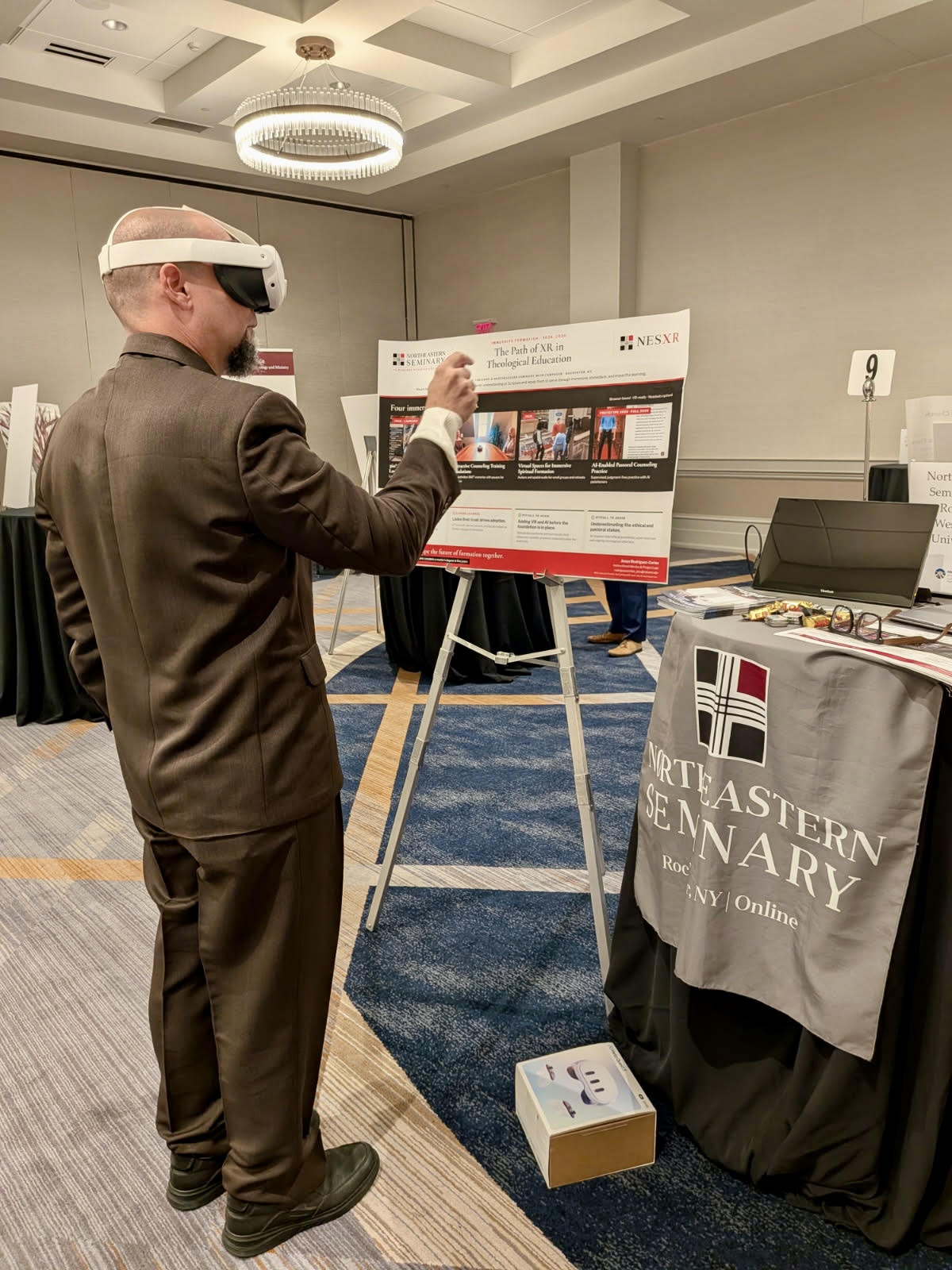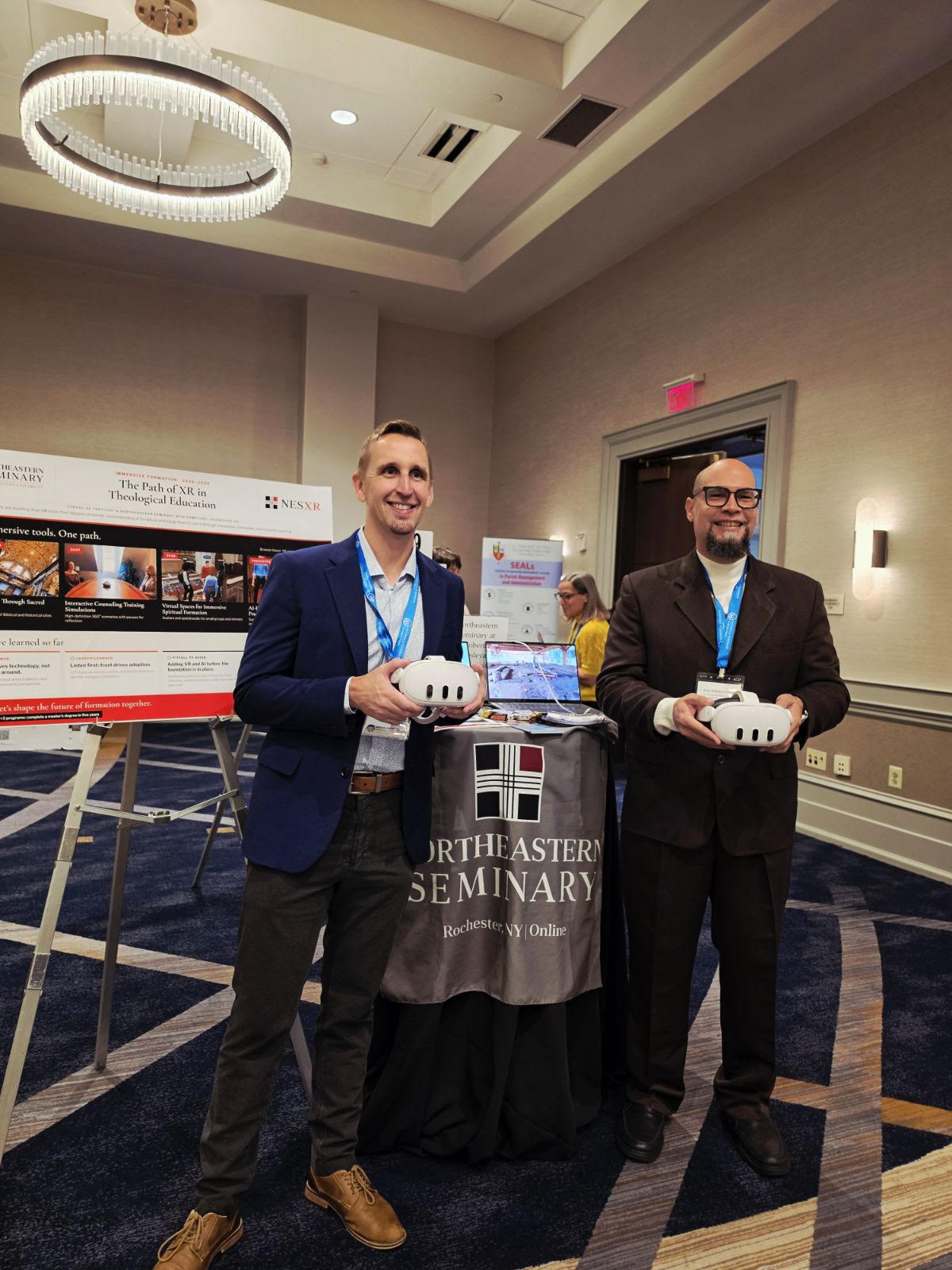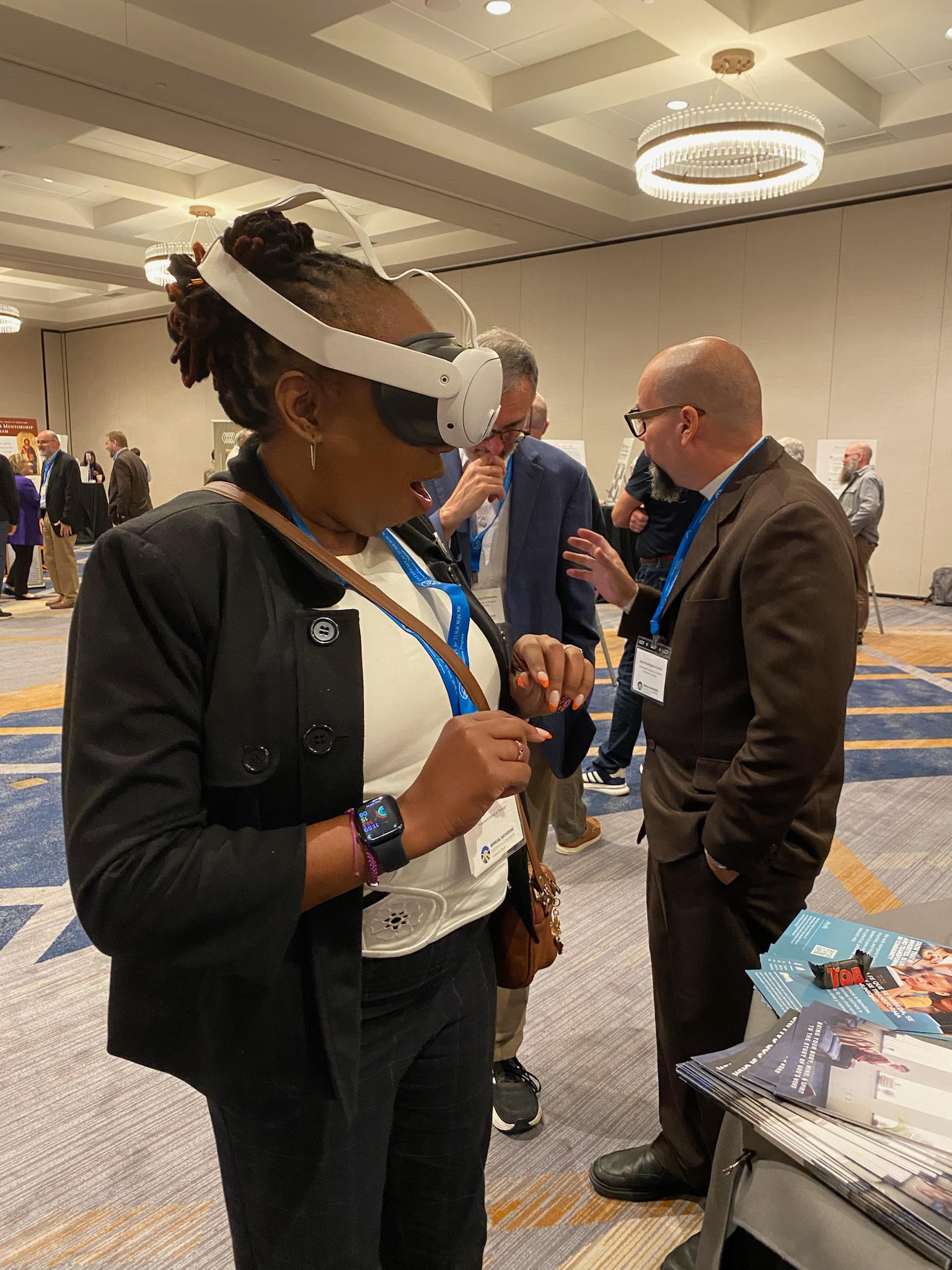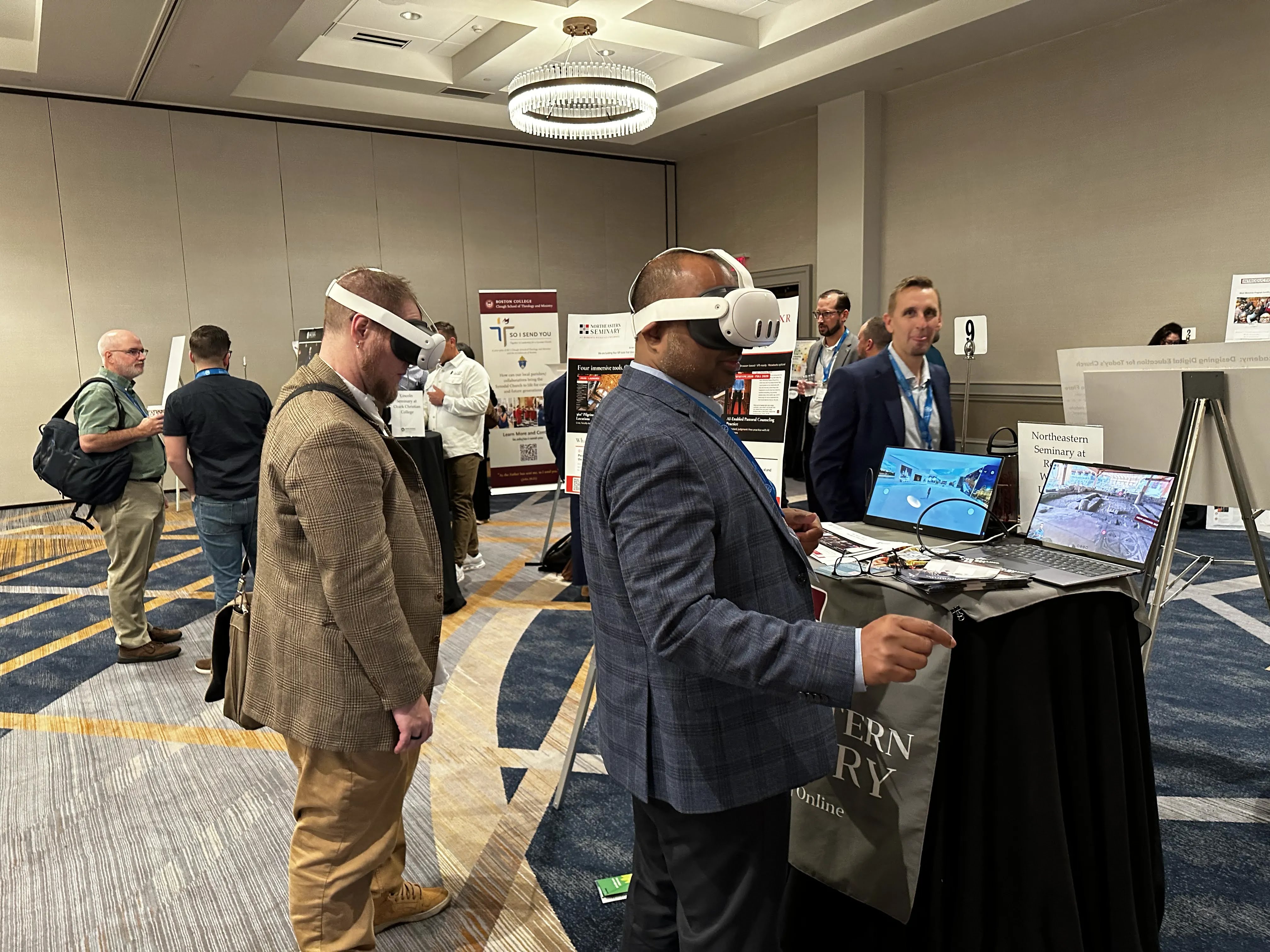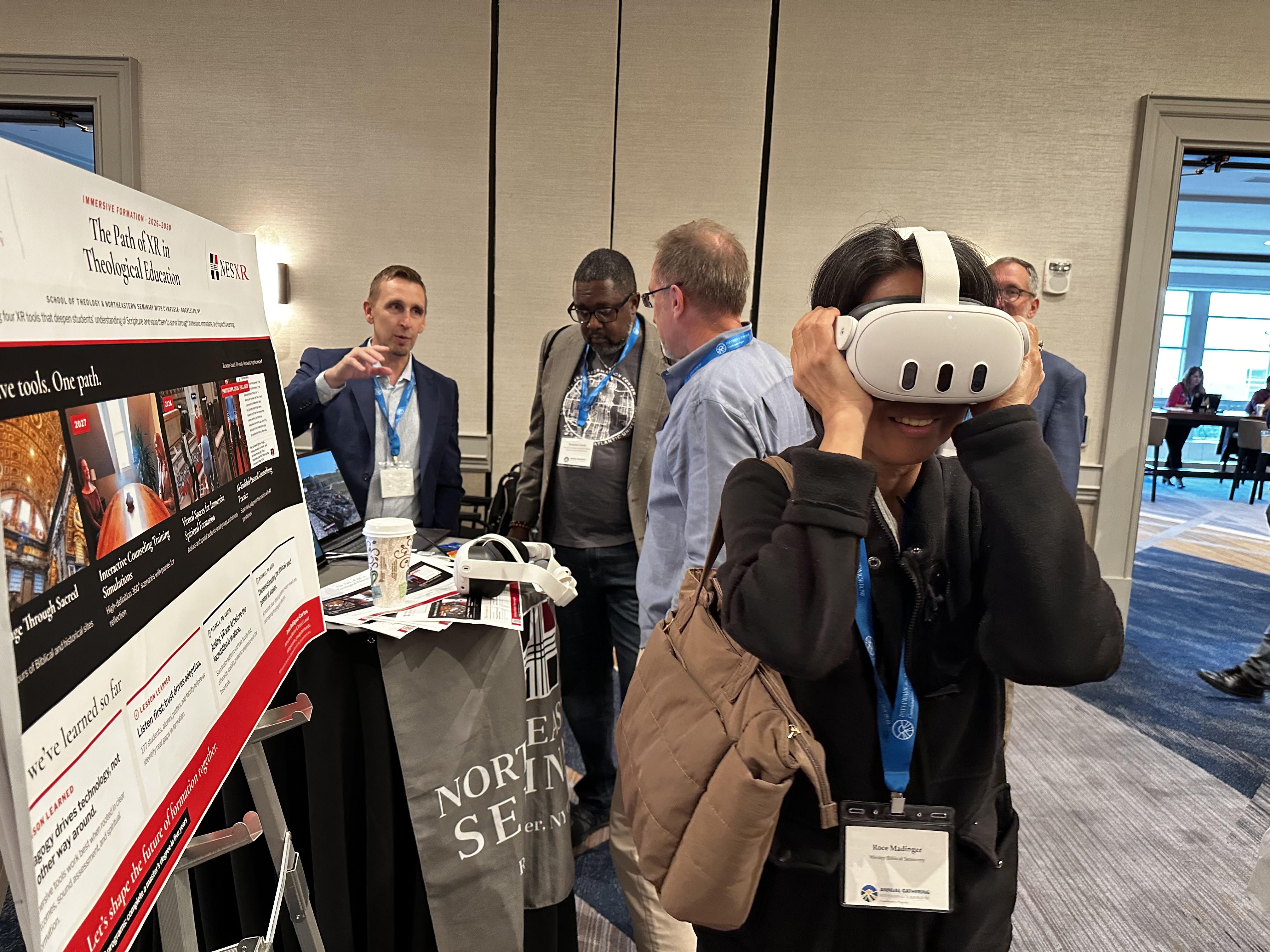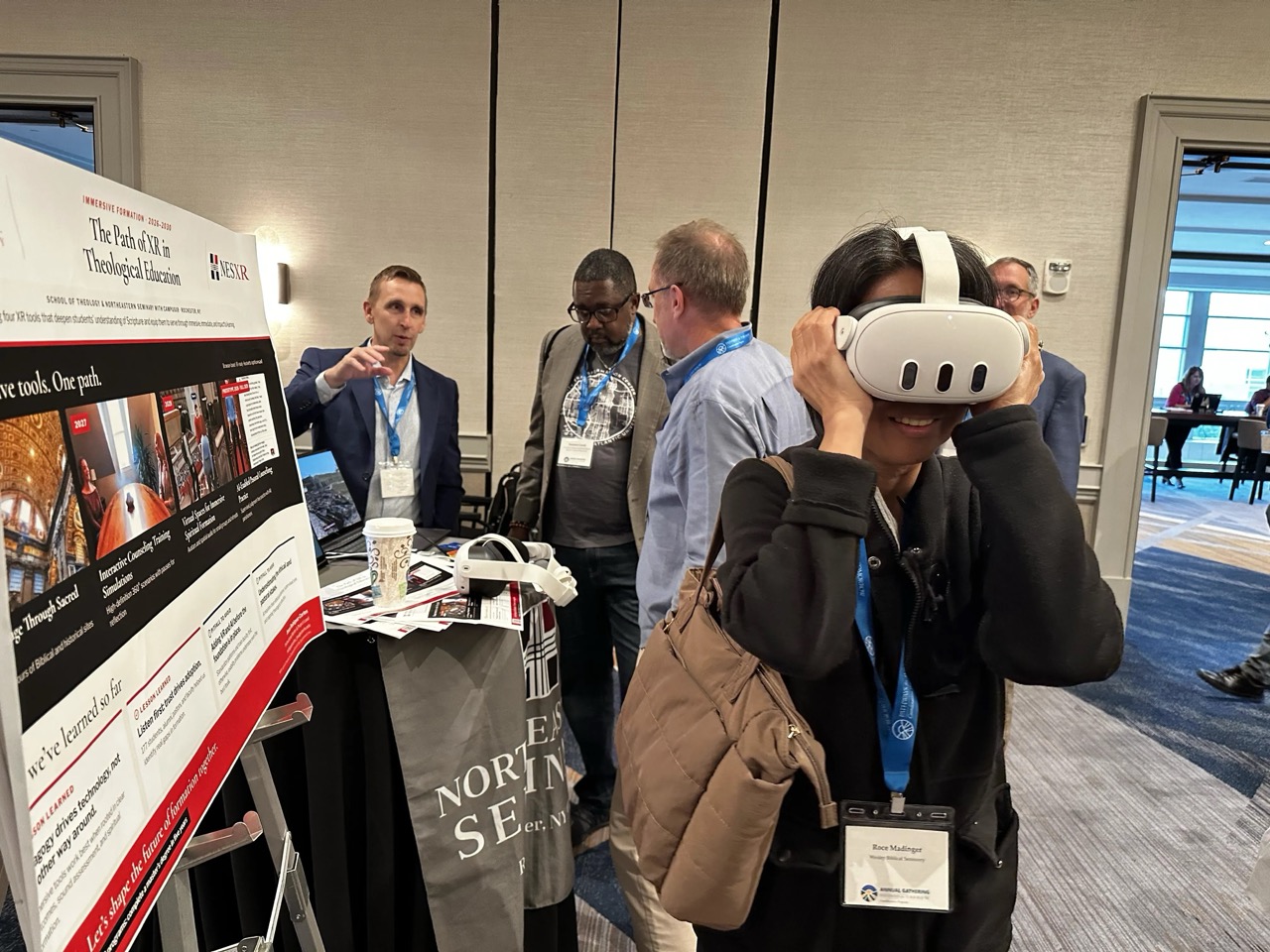
Within 30 seconds of putting on a virtual reality headset, visitors to Northeastern Seminary’s table at the 2026 Annual Pathways Gathering in Indianapolis were transported from the conference floor to Magdala and the old city of Jericho.
People turned to take in their surroundings, laughed in surprise, and invited colleagues to try it for themselves. When the headsets came off, the questions quickly followed: How did you build this? Could we do this too?
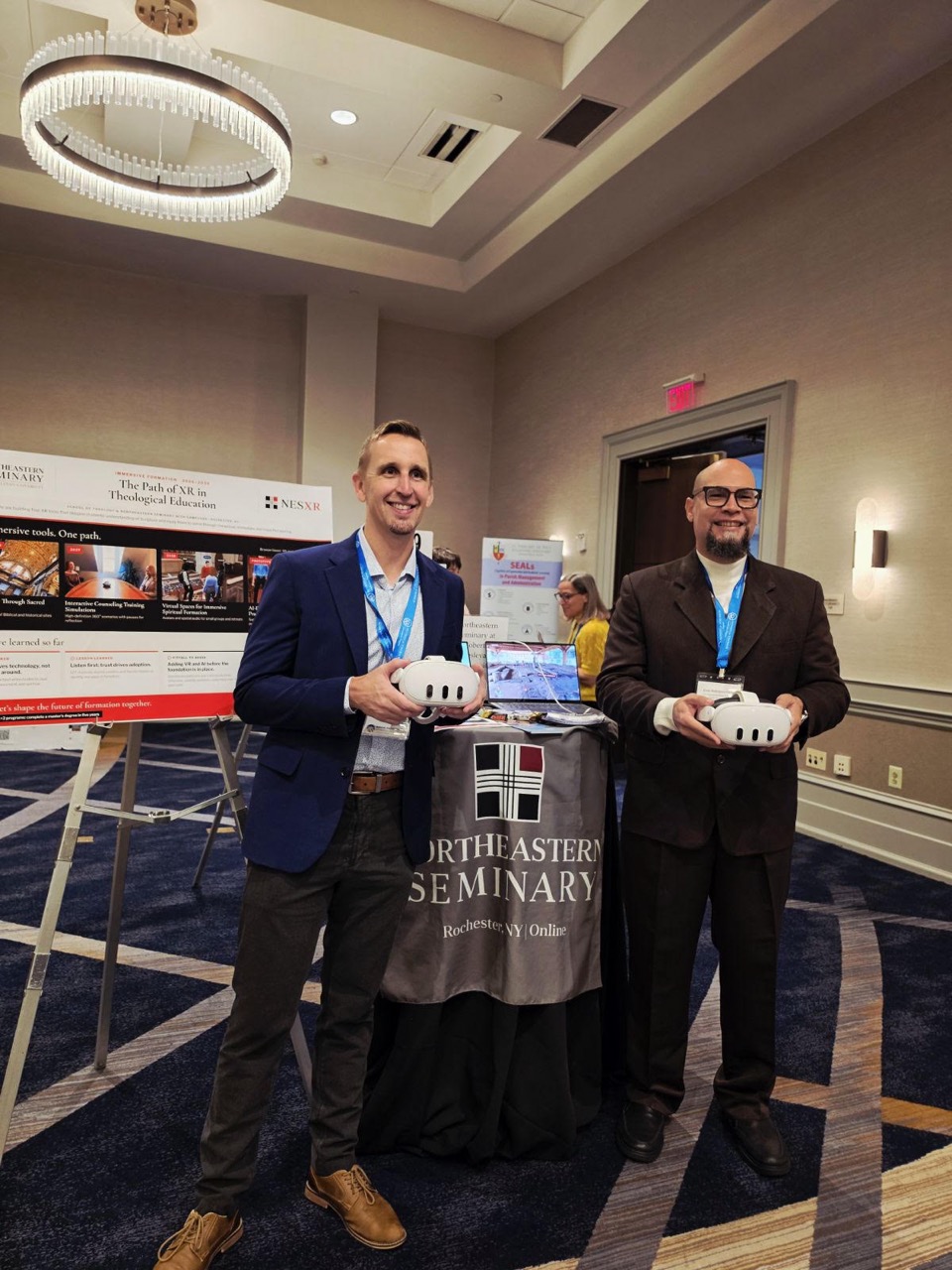
Northeastern Seminary presented Immersive Formation: The Path of XR in Theological Education at the annual gathering, giving theological educators and leaders from across the country an opportunity to experience the Seminary’s work with extended reality, or XR.

The technology allows students to move beyond simply reading or hearing about a place or situation. A student studying the biblical world might virtually explore Magdala or Jericho alongside a professor. Other applications could include interactive counseling simulations that allow students to practice responding to situations they may encounter in ministry.
For Northeastern Seminary, the goal is not technology for technology’s sake. It is finding meaningful ways to help students connect what they are learning with the people and communities they are preparing to serve.
Building on a History of Innovation
Northeastern Seminary has a history of exploring new ways to make theological education accessible and engaging. Fifteen years ago, the Seminary was among those teaching through video conferencing. In 2018, it moved fully online, allowing students to pursue theological education while remaining connected to their churches, careers, families, and communities.
Now, the Seminary is exploring how immersive learning can contribute to theological education and formation as it looks toward 2030.
At the Pathways Gathering, visitors did more than hear about those possibilities. They experienced them. Faculty, administrators, and project leaders returned to the table with colleagues, and conversations about potential collaboration developed throughout the event.
For prospective students, immersive learning could mean opportunities to experience places and situations that might otherwise be difficult to access, all while learning alongside their professors.
The response in Indianapolis offered a glimpse of what is possible when new technology is paired with thoughtful teaching and theological formation.
For Northeastern Seminary, the question moving forward is not simply what new technology can do, but how it can help prepare students for faithful and effective service to the church and the world.